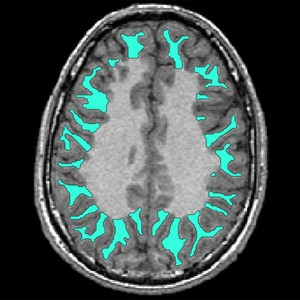
Evidence about some key differences in the brain structures of people with dyslexia and those on the Autism Spectrum (ASD) has been highlighted by Dr. Manuel Casanova, a neuroscientist in the University of Louisville, in the Department of Psychiatry. He’s been focusing on certain types of cortical cell connectors, called mini-columns, which are strands of brain fibers important in connecting brain cells to other brain cells. Apparently and to me not surprisingly, people with dyslexia show an opposite pattern of connectivity than people with Autism Spectrum. Pardon the expression, but “dyslexic brains” favor longer connections at the expense of shorter ones.
People on the autism spectrum have brains that favor shorter connectors. The longer ones seen in the brains of people with dyslexia indicate an easier time with big picture thinking and abstraction. The short connectors, conversely, makes short and more localized connections. Other studies also indicate that brains of people with ASD are inefficient with making the larger generalized connections between more distant areas of the brain. This helps explain that while people with this short connector type of brain structure may see small details easily, might not quickly put together the social meaning.
People with dyslexia also have longer fibers in parts of the brain involved in language processing. The researchers believe this leads to differences in the way their brains develop early in life and that their brains don’t adapt as efficiently to the process of learning to read. These adaptations have been shown in studies of early brain development in children without any learning disabilities.
In short, no pun intended, dyslexic brains are structured so that they are more likely to develop a less efficient reading circuit Casanova said. This explains why children with dyslexia have difficulty sounding out words despite normal or superior cognitive skills.